The real job of a lunch bag is not to look good on a desk; it is to keep food out of the range where bacteria thrive until someone eats it. A packed sandwich, a yogurt, or a container of chicken salad is safe when it is cold and unsafe when it drifts warm, and the whole point of an insulated bag is to slow that drift. Understanding the two temperatures and the two time limits behind food safety makes it obvious why some lunches are fine at noon and others are quietly risky, and it tells you what to look for when you buy bags in any quantity.
The danger zone, in two numbers
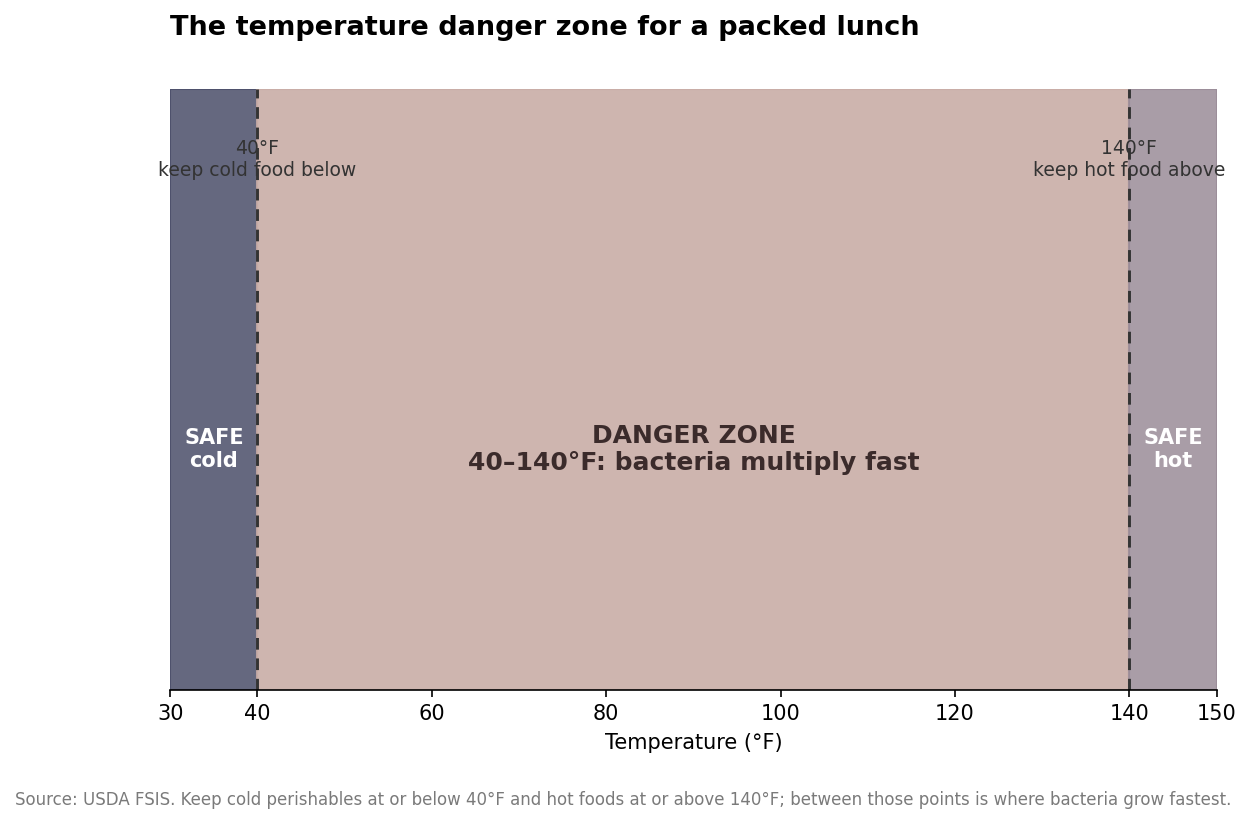
Food safety for a packed lunch comes down to a temperature band. According to USDA guidance, harmful bacteria multiply fastest between 40 and 140 degrees Fahrenheit, a range the agency calls the danger zone. Below 40 degrees, cold perishables stay safe; above 140 degrees, hot foods stay safe. The trouble with a lunch is that it usually starts cold and then sits for hours in a warm room, a locker, or a car, sliding straight into the middle of that band unless something is actively keeping it cool.
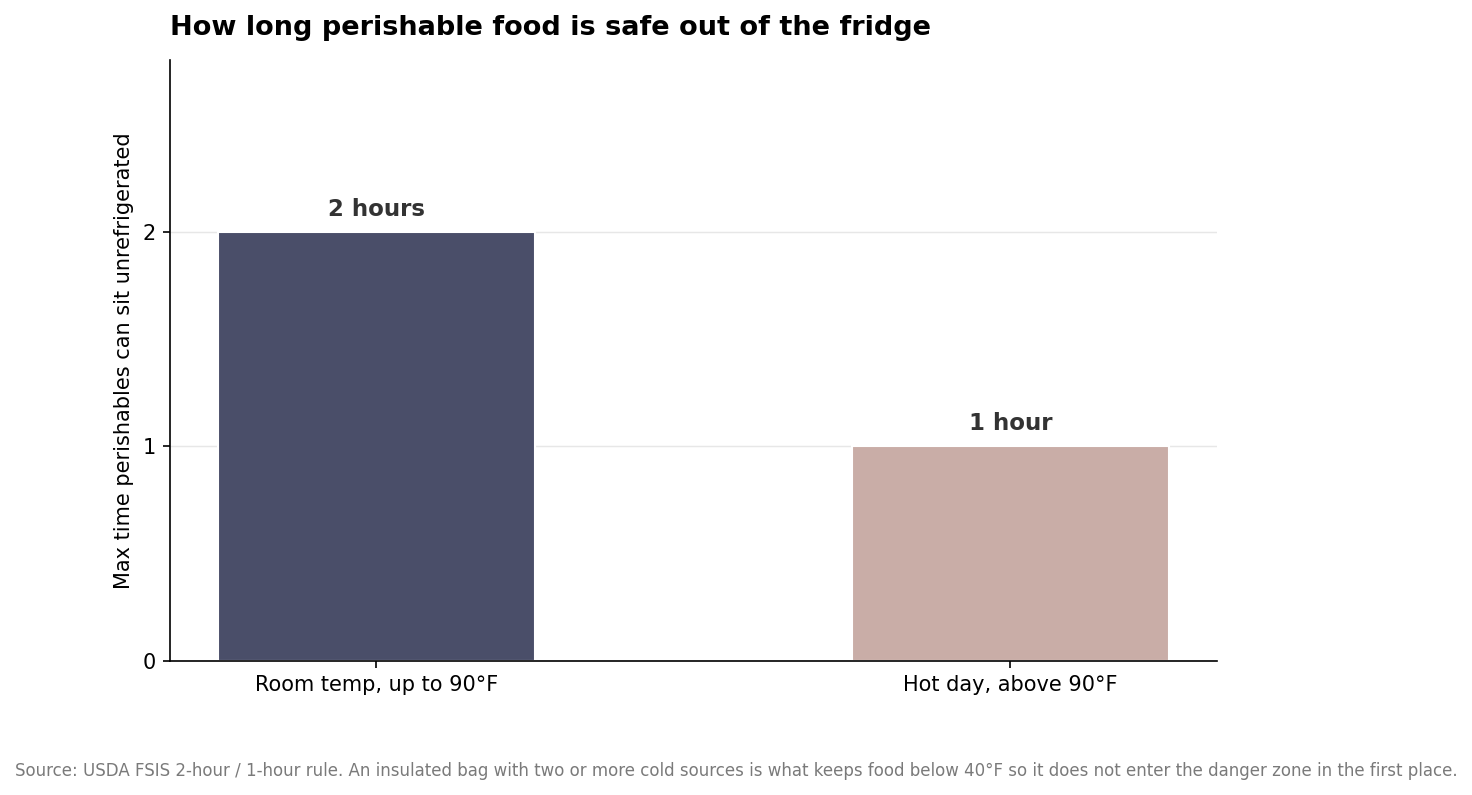
Time is the second half of the rule. Perishable food should not sit in the danger zone for more than two hours total, and that limit drops to one hour when the surrounding temperature is above 90 degrees, such as an outdoor job site or a hot car in summer. Those hours are cumulative across the day, not a fresh clock at each stop, which is why a lunch that rode in a warm bag all morning has less margin left than it appears. An old-fashioned paper sack offers essentially none of this protection and is considered unsafe for perishables beyond that two-hour window.
Why the bag alone is not enough
An insulated bag slows heat transfer, but it does not make cold; it only preserves the cold you put inside it. That distinction is where most food-safety mistakes happen. USDA guidance is specific about the fix: pack at least two cold sources with the food. The recommendation is two frozen gel packs no smaller than about five by three inches each, or a single gel pack combined with a frozen juice box or a frozen bottle of water. Two sources matter because one pack thaws faster than people expect, and the redundancy keeps the interior below 40 degrees through a full morning.
The frozen items do double duty. A bottle of water frozen overnight acts as a cold source on the way in and becomes a cold drink by lunch, and a frozen juice box does the same. Positioning helps too: cold air falls, so placing a gel pack on top of the food, not just under it, keeps the whole interior cooler. The goal is not to make the food icy but to hold it under that 40 degree line so the two-hour clock effectively never starts.
Packing habits that buy you margin
Start cold and stay out of the heat. Refrigerate the assembled lunch overnight rather than packing warm leftovers straight from the counter, since a bag can only hold a temperature, not lower it quickly. Fill empty space, because a half-empty bag has more warm air to fight; tucking the cold packs snugly against the food reduces that air gap. Keep the bag out of direct sun and out of a parked car, where interior temperatures climb into the danger zone within minutes on a warm day. For hot meals, the mirror image applies: pack them steaming into an insulated container meant to hold heat, aiming to keep them at or above 140 degrees rather than letting them cool into the zone.
These habits are cheap insurance. None of them require special equipment beyond a freezer and a little planning the night before, and together they turn an insulated bag from a nice-looking accessory into a genuine cold-holding system.
It is also worth confirming rather than assuming. An inexpensive fridge or cooler thermometer tucked into the bag for a trial run tells you whether your packing routine actually holds the interior below 40 degrees across a real morning, and it quickly exposes weak spots like a single undersized ice pack or a bag left near a sunny window. Freeze gel packs solid overnight rather than grabbing a partially thawed one, since a soft pack has already spent much of its cooling capacity before the day even begins.
What this means when you buy bags in bulk
If you are ordering lunch bags for a school, a team, or a promotional run, food safety should shape the specification, not just the artwork. Look for a genuine insulated liner rather than a single thin foil layer, and make sure the interior volume leaves room for a real lunch plus two cold packs; a bag sized only for the food itself forces the buyer to choose between a meal and the cold sources that keep it safe. Size the bag to the containers people actually carry, since a snug fit reduces the warm air the cold packs have to overcome. A wipeable, sealed liner also matters, because a bag that traps moisture and spills becomes hard to clean and starts to smell long before it wears out.
Insulation performance varies widely between constructions, and no soft-sided bag keeps food cold indefinitely, so treat any bag as a way to extend the safe window rather than remove the limit. Specify a real liner, leave room for two cold sources, keep the whole thing out of the heat, and a packed lunch will still be sitting comfortably below 40 degrees when the lunch bell rings.